Cafe Show Seoul 2026: Plan Coffee Equipment Meetings at COEX
Plan Cafe Show Seoul 2026 equipment meetings with café and distributor briefs, utilities and support questions, supplier email templates and complete quotation comparisons.
Cafe Show Seoul 2026 runs on 11–14 November at COEX. A good equipment meeting should tell you more than how a machine performs in a demonstration: it should identify the version that fits your operation, the installation requirements and the people who will support it after delivery.
1. Start with the equipment decision, then choose the booths
A coffee exhibition can serve several different buying jobs. A distributor may be looking for an export contact and a product range. An operator may need a grinder or brewing system suited to a particular workflow. A roaster may want to discuss equipment, consumables or supporting tools. Those visits need different questions.
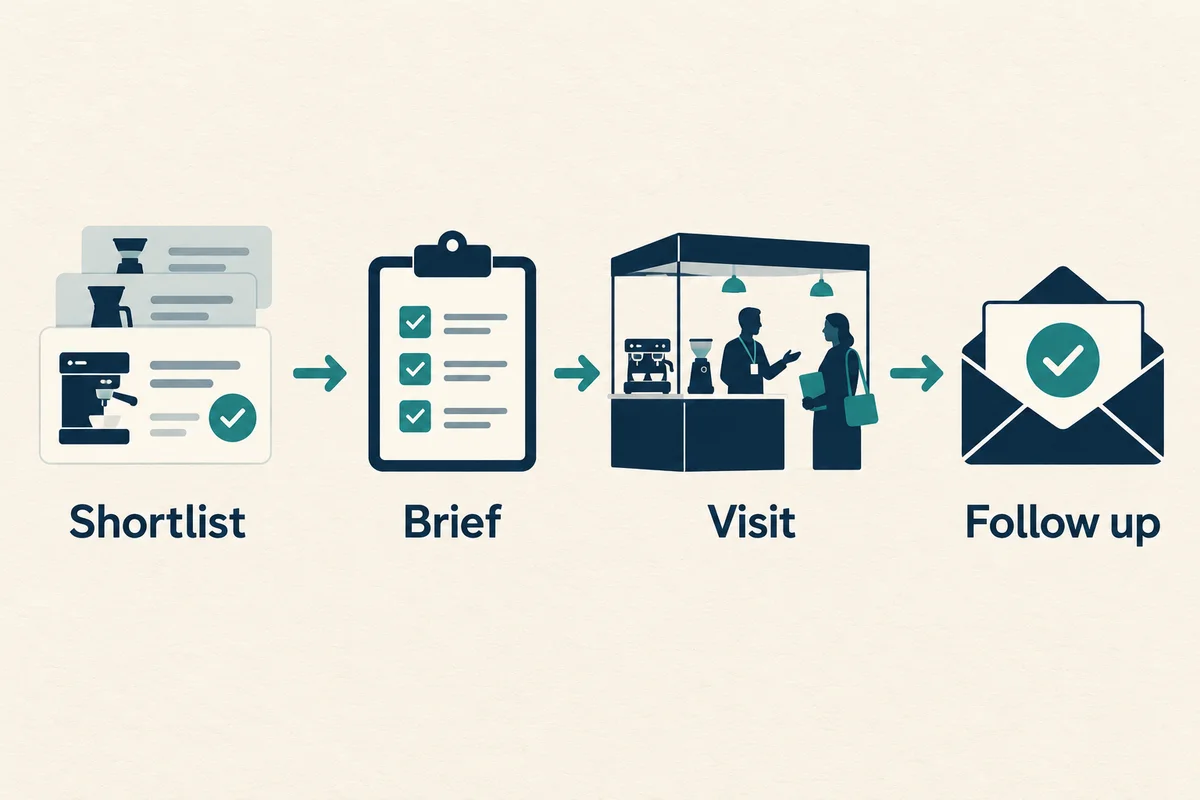
Write a short buying brief before reviewing the live exhibitor directory. Include the equipment category, intended use, destination market and the information needed to decide whether a technical discussion is worthwhile. Where relevant, add the available space, utility constraints and expected operating pattern.
Use the exhibitor directory and floor plan linked from the organizer’s website. Confirm that a shortlisted company will be exhibiting and ask whether the person responsible for your market or product will be available. Do not rely on a previous year’s booth number or assume that every displayed brand is sold directly by its manufacturer.
2. Ask what the demonstrated machine needs in your own operation
A demonstration shows a product in one setting. Your team needs enough information to assess the proposed configuration in its intended setting. Keep the exact model reference and configuration beside the answers so that photographs, catalogues and follow-up messages refer to the same product.
- Utilities and space: ask for the supplier’s installation requirements, including applicable electrical, water, drainage and clearance information.
- Operating use: describe your menu, busy-period workflow and cleaning routine. Ask which grinder or brewing configuration the supplier proposes, and request a demonstration of the relevant adjustments and cleaning steps.
- Ongoing support: identify who handles installation, training, maintenance and spare parts in your destination market.
- Export contact: establish whether the booth representative can provide the relevant documents and commercial follow-up, or should introduce another contact.
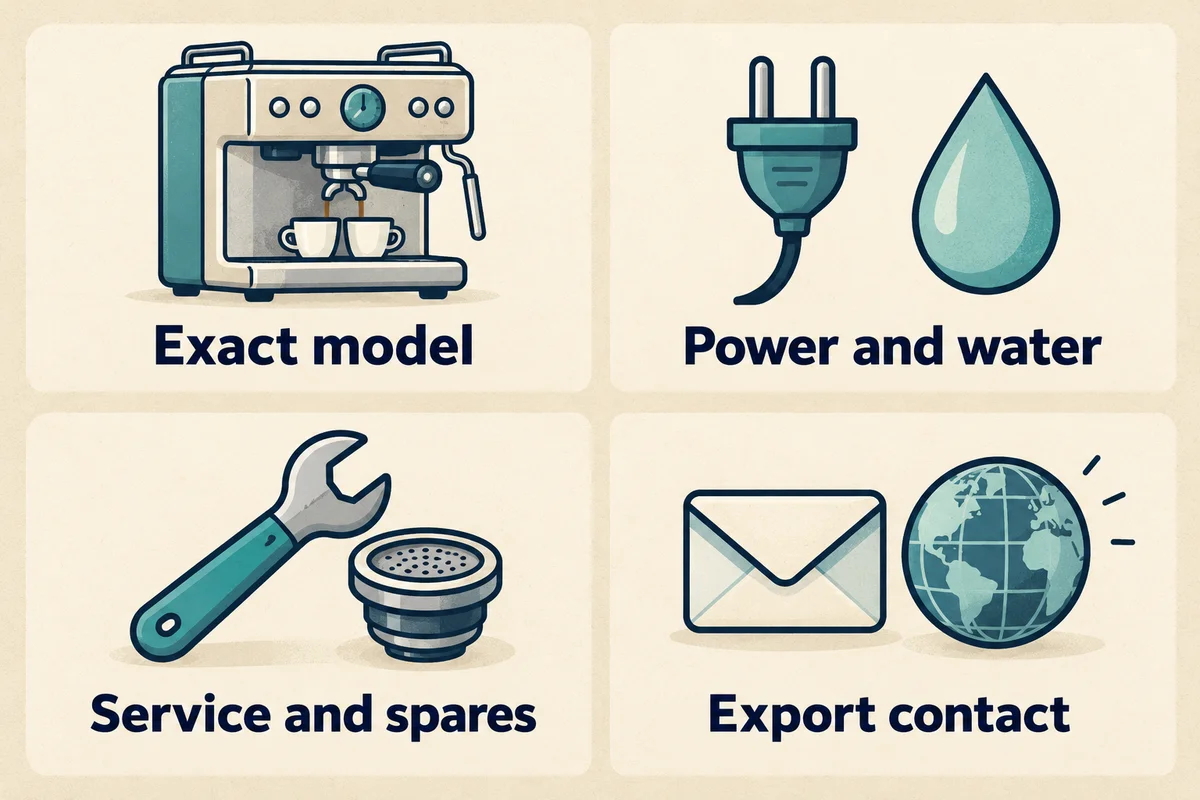
Request the applicable manual or specification sheet rather than relying on a photograph of a display card. Ask your technical team to review the information against its requirements. If a certification or compliance document matters to your destination, record the precise document requested and the product version it covers.
3. Write a brief around your café or distribution business
The same espresso machine can raise different buying questions for a café operator and an equipment distributor. An operator needs to understand daily workflow and site fit. A distributor also needs the sales territory, product range, training route and support obligations. Tell the exhibitor which conversation you are having.
| Buyer type | Prepare before the meeting | Ask for at the booth |
|---|---|---|
| Café operator | Menu, peak workflow, staff pattern and site constraints | Proposed configuration and operating/cleaning documents |
| Multi-site operator | Consistency needs, training and maintenance arrangements | Configuration control and support approach |
| Equipment distributor | Destination, target customers and expected order structure | Export contact, channel conditions and range information |
| Roaster | Use case, production or service workflow and required accessories | Relevant model details and application follow-up |
| New business | Known requirements and decisions still open | Information needed to narrow the options |
For utilities, bring the known site information and ask for the exact installation requirements of the proposed version. Electrical supply, water, drainage, ventilation or clearances may matter depending on the equipment. Do not assume a display machine in Seoul represents the export configuration that would be supplied to your premises.
For a grinder, define the workflow and ask the supplier to show the relevant adjustments and cleaning access. For a brewing system, explain the intended use and the operating pattern. Keep subjective tasting impressions separate from supplier specifications and service arrangements so the buying team can assess each clearly.
 Korea Ops Desk
Connect the equipment to the business
- 01
Use
Menu, workflow or distribution role
- 02
Site
Utilities and physical constraints
- 03
People
Operation, cleaning and training
- 04
Support
Service, parts and supplier contact
4. Ask who supports the equipment after it reaches your country
A booth conversation about export price should also identify the support route. Ask who installs the equipment, who trains the operator, how a fault is reported and how spare parts are ordered. If the supplier mentions a local partner, request its details and the scope it actually handles.
| Support topic | Specific question |
|---|---|
| Installation | Who performs it and what site preparation is required? |
| Training | Who provides it, in which language and in what format? |
| Warranty process | What document explains the terms and claim route? |
| Spare parts | Who supplies model-specific parts and how are they identified? |
| Consumables | Which items are recurring purchases and where are they sourced? |
| Remote assistance | Which contact handles troubleshooting and during what agreed arrangements? |
| Local partner | What company and which services are covered? |
| Documentation | Which manuals and service information are available for this version? |
Record a supplier statement as a supplier statement until the relevant details are received and reviewed. “Service is available in your country” is a starting point. A named company, contact, supported model and written service scope are much more useful for a purchasing decision.
Subject: Cafe Show equipment follow-up: [model] for [destination]
We discussed [model/configuration] at Cafe Show Seoul for [our use or distribution business].
Please send the model-specific specification and installation requirements, available operating/cleaning documentation, and a quotation for [quantity/configuration].
Please also confirm the installation and training route, warranty process, spare-parts contact and any local service partner for [destination]. If another colleague handles export or service questions, please introduce us.
Our remaining questions are [list]. Please indicate the expected reply date.
Korea Ops DeskA support claim needs a practical route
- 01
Company
Who provides the service
- 02
Scope
What equipment and tasks are covered
- 03
Contact
How the buyer obtains help
- 04
Record
Written terms and received documents
For a distributor, keep proposed exclusivity or territory discussions separate from an initial catalogue request. Record the supplier’s actual conditions and the questions your business must review; a friendly booth conversation should not be treated as a concluded distribution agreement.
5. Compare a complete equipment package after the show
List the exact equipment and options in each offer. Separate installation, training, consumables, spare kits and export packing from the base price where applicable. Ask what starts the quoted lead time and what must be confirmed before the supplier can give a ready date.
| Comparison field | Record for every offer |
|---|---|
| Product | Exact model, export version and options |
| Included items | Accessories, tools and initial consumables |
| Installation | Work included and buyer preparations |
| Training | Scope, location and delivery format |
| Support | Warranty document, service route and spare-parts contact |
| Commercial terms | Currency, quantity, payment stages and quote validity |
| Delivery | Named delivery basis, packing and shipment information |
| Schedule | Lead-time trigger and outstanding buyer inputs |
Worked example: a grinder that fits the menu but not the support plan
An overseas café group likes a grinder demonstration and receives an attractive unit price. Its brief also requires staff training and a defined spare-parts route. The follow-up asks for the exact model, cleaning documentation, training format and parts contact. The team then compares the complete proposal with another supplier’s package. Taste and workflow remain important, but the purchase now accounts for ongoing operation.
- Label each permitted photo with the company and exact model.
- Save the current specification and the contact who supplied it.
- Send a short, numbered list of missing commercial and support points.
- Review the proposed version against the actual site information.
- Choose a technical discussion, further demonstration or revised quotation as the next action.
Korea Ops DeskMove beyond a memorable demonstration
- 01
Identify
Exact model and proposed version
- 02
Check
Site fit, workflow and support
- 03
Compare
Complete scope and commercial basis
- 04
Decide
Next evidence or buying step
The official visitor guide lists the current pre-order ticket period as 1–8 November 2026. Review the current pass type and business/public-day conditions before booking. Your meeting schedule should also identify the relevant export or technical contact, not just a booth number.
KOD can collect answers from the selected equipment booths and chase the promised follow-up documents in Korea. Send the requirements your buying team needs resolved, including support questions that might otherwise be lost in a busy demonstration.
6. Leave each meeting with a usable record
Business cards and a folder of photographs become more useful when they are connected to a decision. For each priority booth, record the company, contact, model discussed, supplier’s answer and the document actually received. Keep a separate entry for unanswered questions.
For example, if a representative says a service partner is available in your country, request that partner’s details and the scope of support in writing. Record the statement as the supplier’s answer until your team has checked it.
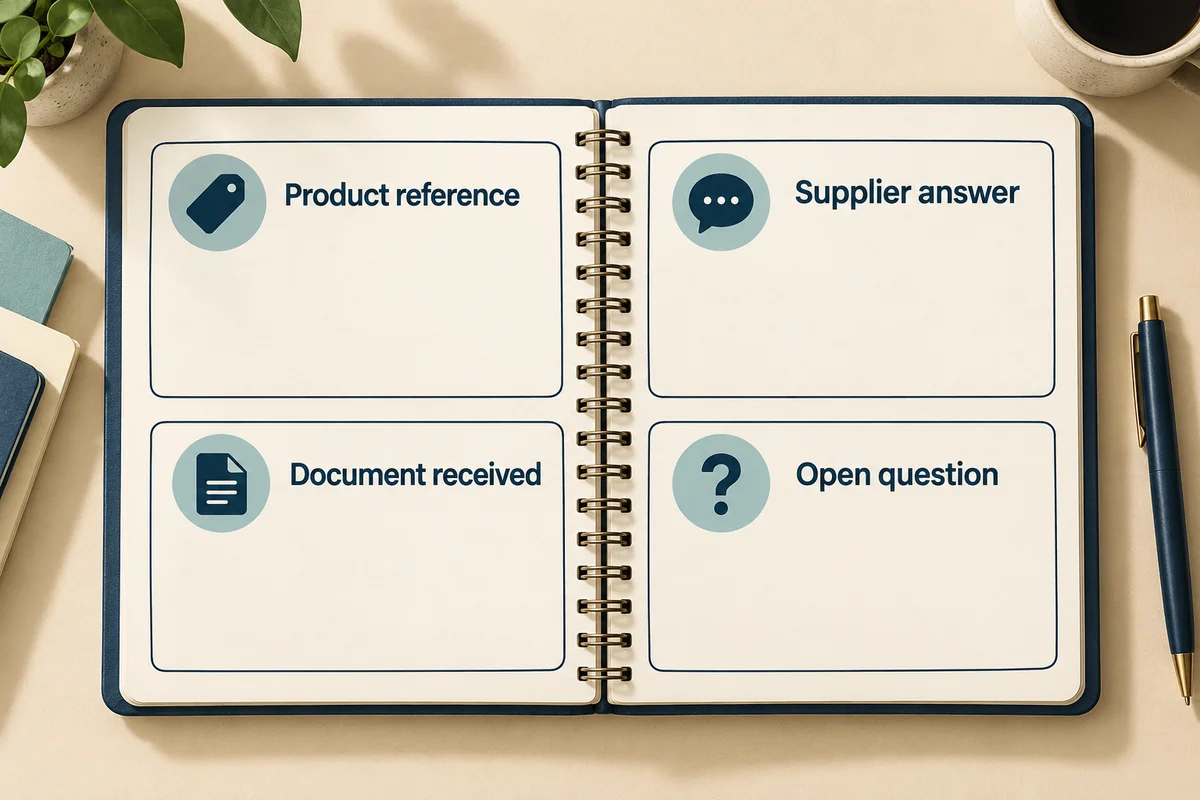
Ask permission before taking photographs or recording demonstrations. Note which details still need a catalogue, technical response, sample or direct meeting. Your follow-up can then address the missing evidence instead of starting the conversation again.
7. Choose who needs to be there
Send your own specialist when the decision requires their hands-on assessment or a detailed negotiation. For a narrower information-gathering assignment, a prepared Korea-based representative can visit selected booths, ask agreed questions, collect available materials and return an English summary.
The brief should distinguish essential booths from optional ones and identify what the representative may share about your project. It should also state the useful output for each visit: a named contact, a specific document, permitted product photographs or answers to a defined set of questions.
That makes a local visit a practical first step for a remote buying team. The team can review the findings and decide which exhibitors merit a deeper technical discussion, sample request or later visit. See KOD’s guide to arranging on-site assistance in Korea for preparing a focused assignment.
8. Practical information
- Event: The 25th Seoul International Cafe Show, also called Cafe Show Seoul 2026.
- Dates and venue: November 11–14, 2026; COEX Halls A–D, Seoul.
- Hours: November 11–13, 10:00–18:00; November 14, 10:00–16:00. Last entry is 30 minutes before closing.
- Day types: November 11–12 business days; November 13–14 public days, according to COEX.
- Hosts: Exporum and Monthly Coffee, as listed by COEX.
- Registration: check the official visitor guide for the current ticket stage, business-day eligibility and registration requirements.
9. Official sources
Need coffee equipment answers from selected Cafe Show booths?
Korea Ops Desk can visit your priority exhibitors, ask the prepared equipment and support questions, gather available materials and permitted photographs, and pursue Korean supplier replies.
Send us: Equipment category, intended use, destination, priority brands/exhibitors, site constraints and the documents your team needs.
24/7 inquiries · colin@koreaopsdesk.com
Related practical guides
Expanded on 2 November 2026. Worked transactions and message templates are illustrative examples.