AW 2027 at COEX: Turn an Automation Idea into a Supplier Brief
Prepare for AW 2027 at COEX with an automation application brief, sample evidence map, demonstration questions and a supplier email your team can use.
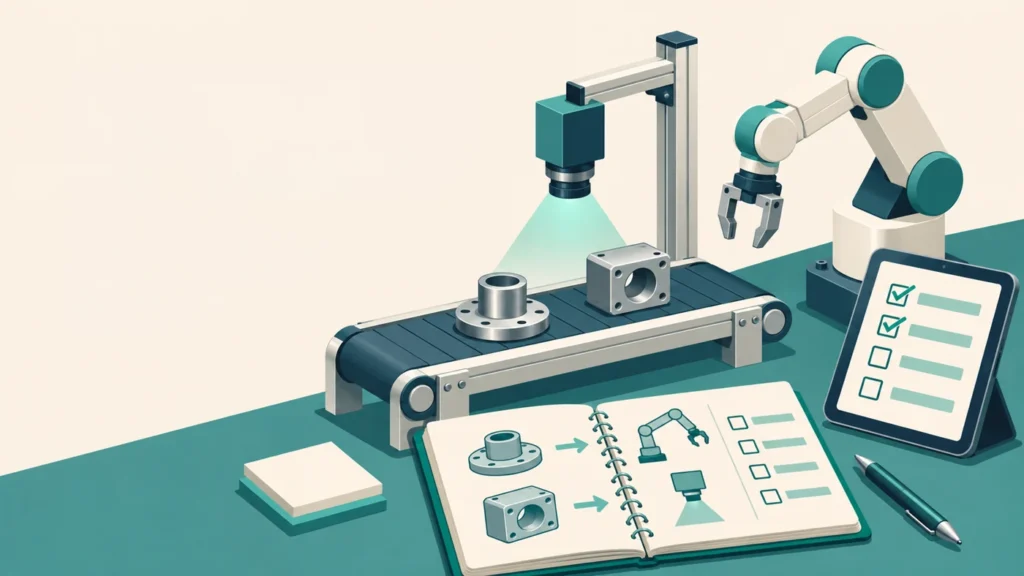
Automation World AW 2027 is scheduled for 3–5 March 2027 at COEX in Seoul, according to the organizer’s English website. Overseas manufacturers preparing automation purchases can use the lead time to turn a broad interest in robots, vision or factory software into an application brief that suppliers can assess.
Event information checked 11 November 2026. Event facts are attributed to official sources below; the project-scoping workflow, email and worked example are KOD recommendations.
What is confirmed for AW 2027?
The organizer lists aimex, Korea Vision Show, Smart Factory Expo and Smart Logistics Zone, together with an AI Factory Pavilion. COEX’s own event listing confirms the same dates and identifies the venue as Halls A–D, lobby, The Platz and Grand Ballroom.
The COEX listing connects these sections with automation components and control, machine vision, manufacturing software, logistics systems and AI technologies. That breadth creates a useful buying opportunity: a production problem may involve several suppliers, with different responsibilities for sensing, motion, software and integration.
KOD analysis: Start with the task your factory needs to perform and the evidence needed to assess a proposal. A successful booth demonstration is most useful when you understand the product presented, operating conditions, measured result and work still needed at your site. Ask the supplier to identify those boundaries before requesting a budget or arranging a visit.
Define the production problem before choosing a technology
Prepare a one-page application brief with your production or engineering owner. An application brief is a concise description of the job, operating conditions and decision you want a supplier to address. Ask the production team for the current process, engineering for drawings and interfaces, and quality for the defect definition and inspection decision. Keep their names beside the fields they own so supplier questions reach the right person.
Write the desired result in observable terms. “We want AI inspection” does not explain which defect matters or how the line works. “Check whether the required hole is present on each part, record the result and identify how the line will handle a failed check” gives a supplier a specific task to discuss. Let your authorized technical team set the performance requirement and review how it should be tested.
 Korea Ops Desk
Three parts of an answerable automation brief
| Field | What to enter and where to obtain it | Question for the supplier |
|---|---|---|
| Product and variants | Part number, drawing revision, dimensions and relevant materials; obtain the current approved file from engineering. | Which variants can the proposal address, and which need separate evaluation? |
| Current process | Short sequence and permitted photos or video from production; identify how parts arrive and leave. | Which steps would your equipment perform and which remain with us? |
| Inspection or handling objective | Written defect definitions, labeled examples or handling constraints agreed by quality and production. | What input is needed to assess feasibility and design a representative trial? |
| Operating conditions | Current rate, product presentation, available space and relevant environment from the line owner. | Which conditions must be controlled or changed? |
| Existing interfaces | Equipment references and available interface documentation from controls engineering. | Who supplies connection hardware, programming and integration? |
| Commercial decision | Project stage, intended installation country, desired decision date and budget status from the project owner. | What can you quote now, and what depends on a sample trial or site review? |
If a field is unknown, mark it “to be measured” and assign an owner. Send an early brief with those gaps visible rather than inserting a guess. Ask the supplier which missing fields prevent a meaningful answer; prioritize those measurements before gathering a large file nobody needs.
Build a demonstration evidence pack the supplier can interpret
Ask the supplier what format and quantity of samples or images it needs before sending material. Begin with a file index: filename, part variant, revision, condition and what the file is intended to show. A photograph with an unexplained red circle can create a different interpretation from a quality team’s defect definition.
For a vision discussion, include examples of acceptable and unacceptable conditions where available and approved for disclosure. Ask quality to label them using the same defect names as the brief. Explain known variation: the product range, presentation, finish and other conditions relevant to your process. Ask whether the proposed assessment uses your actual samples, supplied images or the exhibitor’s demonstration pieces.
For a handling discussion, record the part identity, orientation, presentation method, pick-and-place task and what the next station expects. Ask the supplier which trials require physical parts and how sample receipt and return would be arranged. Agree disclosure limits before forwarding drawings or images. If the material needs confidentiality review, send a summary first and agree the document route.
Korea Ops DeskMake each demonstration result traceable
Request a demonstration record that names the tested samples, setup and result. Ask how failed detections, rejected good parts or unsuccessful handling attempts are recorded where relevant. Agree the assessment method with your own technical team. A summary saying “works well” leaves the next reviewer without enough information to determine whether another trial is needed.
Example: a missing-hole inspection project
Consider an illustrative overseas manufacturer assessing inspection of a machined component with several variants. The goal is to flag a missing hole before the part moves to the next operation. This is a planning example, not a reported customer project or a claim about a supplier’s equipment.
- Define the defect. Engineering identifies the required feature on the current drawing; quality labels acceptable examples and missing-hole examples. Give every variant its own reference.
- Describe presentation. Production records how the component is positioned and when an inspection could occur. If the orientation varies, include that unresolved condition in the brief.
- Ask for the trial plan. The supplier explains which samples and conditions it needs, what it proposes to demonstrate and which questions require a later site assessment.
- Keep the demonstration record. Record which parts were actually tested, the setup, each reported result and the limits stated by the supplier. Request permitted supporting images or a written summary.
- Separate inspection from integration. Ask who provides the result signal, rejection handling, mounting, guarding review, controls work and commissioning. Send these scope questions to the responsible integrator and your engineering team.
- Choose the next step. Your technical owner reviews the evidence and decides whether to request further samples, a formal feasibility study, a revised scope or a quotation.
At this stage, a useful completed outcome is an agreed next evaluation with identified inputs, responsible parties and a stated deliverable. A purchase decision requires the further technical and commercial checks appropriate to your project. For later-stage equipment discussions, KOD’s factory acceptance test guide explains how to organize agreed tests and evidence before shipment.
Send a practical supplier request before arranging a demonstration
Use the following template after identifying a relevant supplier. Replace brackets with your actual information and attach the approved brief or cite its filename. Ask the supplier to identify the technical contact who can assess the task.
Hello [Name],
We are evaluating [inspection / handling / production task] for [site country and process]. Our application brief [filename / revision] describes the product variants, current process and operating conditions.
The decision we need to make is [specific next decision].
Please confirm:
1. Whether this task fits your product or integration scope, and which technical contact should review it.
2. The sample, image, drawing and interface information you need for an initial assessment.
3. What you could demonstrate, which conditions would apply and what evidence we would receive.
4. Which work would be supplied by you, by another integrator and by our team.
5. Whether you plan to participate in AW 2027 and whether an appropriate discussion or demonstration could be arranged.
Open information in our brief: [items and expected availability].
Our intended next decision date is [date].
Please identify any feasibility-study or sample-trial charges and the proposed deliverable before we authorize that work.
Please reply with the missing inputs and the next practical step.
Best regards,
[Name / company / business contact]
If the supplier cannot confirm participation, ask whether a remote technical review or another meeting is available. Record the reply before booking around that company. Arrange any physical samples only after agreeing receipt, permitted use and return or disposal instructions.
Handle missing answers and compare the actual scope
When a reply arrives, put the answer beside each numbered question. If a supplier sends only a catalog, acknowledge it and identify the specific unanswered item: “Please confirm which product in this catalog you propose for brief revision B, and which samples you require to assess it.” If the contact lacks the technical answer, ask who owns the review and when that person can respond.
When two proposals differ, compare responsibilities before comparing the total. A component-only offer and an integrated workstation can cover very different work. Request a scope matrix showing equipment, fixtures, controls, software licenses, integration, installation, training, service route and recurring charges where relevant. Use “included,” “quoted separately,” “by buyer” and “unconfirmed” consistently. See KOD’s quotation comparison guide for a broader commercial worksheet.
Korea Ops DeskLet the response determine the next assignment
Record a short recap after every substantive call: company and contact, brief revision discussed, answers attributed to the supplier, files received and open actions. If a requirement changes, issue a new brief revision and ask the supplier which earlier assumptions or prices need review. Keep the prior version marked as superseded so the next conversation uses the current scope.
Official sources and visitor checks
- AW 2027 English homepage — event dates and exhibition sections.
- AW 2027 official overview — event and venue outline. Some lower sections still display 2026 material; confirm edition-specific details before relying on them.
- COEX AW 2027 event listing — dates, venue and exhibit categories (Korean).
The organizer’s visitor-guide link returned a 404 response during this check on 11 November 2026. Current admission charges, registration availability and final visiting hours therefore remain unverified here. Recheck the organizer’s English homepage and obtain current visitor instructions before making travel commitments. The homepage currently labels its linked floor plan and exhibitor directory as AW 2026; confirm 2027 participation directly with the companies you plan to meet.
Visit the Official Exhibition Website
Need Korean supplier answers for your automation project?
If your team has an application brief but needs help reaching the right Korean contact, Korea Ops Desk can contact named suppliers, relay your prepared questions, follow up on requested documents and organize the replies in English. For agreed exhibition coverage, KOD can visit selected booths, collect public materials and permitted photographs, and return an English findings summary.
Send what you have: the production task or product reference, target supplier names, a brief or permitted drawing/photos, your priority questions and the date you need the answers. A short summary is enough to start; Colin will discuss the scope and quote.
Review KOD trade show coverage and its inquiry form · Supplier contact and follow-up
24/7 inquiry support · colin@koreaopsdesk.com