InterBattery 2027: Prepare Separate Briefs for Cells, Materials and Equipment
Plan InterBattery 2027 supplier discussions with separate briefs for battery cells, materials and equipment, a meeting worksheet and a practical supplier email.
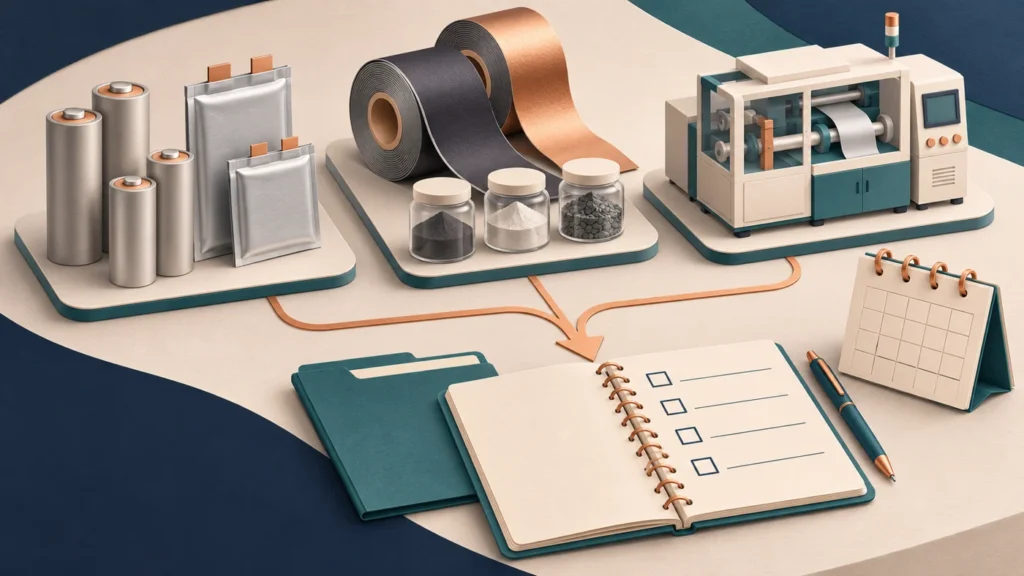
InterBattery 2027 is scheduled for 10–12 March 2027 at COEX in Seoul, according to the organizer’s English overview. For overseas purchasing teams, the first preparation step is to decide whether a conversation concerns battery cells, materials or manufacturing equipment, then give the relevant supplier a brief it can answer.
Event information checked 12 November 2026. Event facts below come from the linked official pages. The buying worksheet, illustrative example and follow-up methods are KOD recommendations.
What is confirmed for InterBattery 2027?
The official visitor guide names Korea Battery Industry Association, COEX and KOTRA as organizers. The overview covers rechargeable batteries, capacitors, materials and components, manufacturing equipment, and test and measurement equipment. This range means a buyer may need several different technical and commercial contacts.
The organizer also describes business matching at exhibitors’ booths. A meeting request and an accepted appointment are separate stages: the published workflow includes a waiting list where requests can be approved or rejected.
KOD analysis: A useful exhibition meeting should produce a clear next decision: which product or process merits further evaluation, which evidence is missing, and who will provide it. Build separate question lists for the products you buy and the equipment used to make them. A single message asking for “battery solutions” gives the recipient too little context to assign the right person.
Choose the supplier conversation your project needs
Start with the internal project owner. Ask engineering what must be evaluated, purchasing what commercial information is needed, and quality what evidence will be reviewed. Record the intended application and destination country. Use approved requirement documents where available; if requirements remain open, identify the decision still being made.
 Korea Ops Desk
Three supplier conversations, three different briefs
| Buying track | Prepare with your team | Ask the supplier |
|---|---|---|
| Cells or packs | Application summary; configuration or product reference; approved performance requirements; intended use and country. | Which specific product is proposed? Which current technical documents and model-specific test records can be provided for our review? |
| Materials or components | Specification or drawing revision; intended process; sample evaluation criteria; estimated trial quantity. | Which grade or revision matches the request? What sample quantity, documentation and handling information can you provide? |
| Manufacturing equipment | Process description; input material; desired output; available space and interfaces; trial objective. | Which process steps are included? What inputs would you need for a trial, what would it demonstrate, and what record would we receive? |
A technical document can identify a proposed product without resolving whether it fits your application. Ask your authorized technical team to state what evidence it requires before approving a sample or purchase. Keep the supplier’s statements attributed to the supplier and record which documents your team has actually reviewed.
Do not attach a large confidential file set to the first general inquiry. Send a non-confidential summary and a list of available files, then agree who will receive the detailed material and under what disclosure arrangements. When a field is unknown, write “open” and name its owner rather than guessing.
Prepare one meeting sheet for each supplier
Create a sheet with the supplier’s legal or trading name, website, proposed product or process, contact, brief revision and the decision you want to make. Add three priority questions, the requested documents, the proposed meeting time and its confirmation status. This keeps a battery-cell discussion separate from a coating-equipment demonstration even if both concern the same project.
Use a simple status vocabulary: “to contact,” “request sent,” “awaiting acceptance,” “confirmed,” “completed” and “follow-up open.” A company name on a list does not establish its participation, the product on display or a technical person’s availability. Ask the company to confirm these details and use its reply when arranging your schedule.
Korea Ops DeskKeep the appointment and the buying evidence together
How does the official business-matching process work?
The live organizer’s business-matching page lists this path for pre-registered attendees: Visitor Login, My Page / My Biz-Match, Edit My Info and submit, then request a meeting by company and date. Review the arrangement result and distinguish a pending request from an approved one. The page identifies booth meetings on 10–12 March 2027.
Before using a registration or meeting form, confirm that the screen concerns the 2027 edition. During this check, some official English pages and links retained earlier-edition material, although the live matching screen displayed 2027. If a form’s year, deadline or instructions disagree, ask the organizer which current route to use before entering or relying on the information.
After acceptance, ask the supplier for the booth or meeting location, the contact’s name and language, and the product or documents it expects to discuss. Leave time between appointments for movement and notes. If an appointment remains pending, follow up with the named company and retain an alternative meeting option.
Exhibition admission, a business-matching request and conference access should be checked separately. Use the current visitor guide for admission instructions. On 12 November 2026, the visitor page’s pre-registration link displayed “Coming soon.” Its QR-email note also named 3 March as two days before the show, which does not align with the listed 10 March opening. Confirm the current registration instructions with the organizer before relying on that note.
A supplier email you can adapt
Use this illustrative message for a named supplier. Replace the brackets, attach only approved material and remove questions that do not fit your buying track.
Subject: InterBattery 2027 discussion — [application / product or process]
Hello [Name],
We are evaluating [cells / materials / equipment] for [application and destination country]. Our immediate decision is [sample evaluation / process trial / product shortlist].
Our brief is [filename and revision]. It includes [key requirement and available information]. The following items remain open: [items and responsible person].
Please confirm:
1. Whether you plan to exhibit at InterBattery 2027, and the appropriate technical and export contact.
2. Which product, grade or equipment scope you propose for this brief.
3. Which technical documents, sample information or trial proposal you can provide before the meeting.
4. What you need from us to assess the request.
5. Your available meeting times, location and discussion language.
Our priority questions are [three questions]. Please identify any proposed sample, trial or other charge and its scope before we authorize work.
Requested next update: [date]. Please let us know which points you can answer now and who will handle the remaining items.
Best regards,
[Name / company / work contact]
Example: separate a cell inquiry from an equipment inquiry
Consider an illustrative overseas team assessing a battery-powered product while also exploring a future production project. It initially writes “we need a battery supplier” to several exhibitors. Replies include cell catalogs and equipment brochures, leaving purchasing unsure what to compare.
- Split the decisions. Sheet C-01 covers a candidate cell for the product; sheet P-01 covers a proposed production process. Each has a named internal owner.
- Request the appropriate evidence. For C-01, ask the proposed cell supplier for the exact product reference and documents specified by the engineering reviewer. For P-01, send the process outline and ask what input information is needed for a trial proposal.
- Assign the contacts. Confirm which person answers product questions and which handles process equipment. Record whether each company will participate in the show.
- Define the meeting outcome. C-01 may seek an agreed sample-evaluation plan; P-01 may seek a written trial scope. Keep any cost authorization separate and explicit.
- Close the next action. Save the document references, owner and next update for each track. Ask the authorized technical team to decide whether the evidence is sufficient to proceed.
This is a planning example. It illustrates why two relevant companies can still require different briefs and deliverables. Once comparable quotations arrive, use KOD’s supplier quotation comparison guide to check the commercial scope.
What should happen when replies are incomplete?
Put each supplier reply beside the numbered question it answers. A catalog-only response may be a useful starting point: reply with the specific product or process question still open and request the responsible technical contact. If a supplier proposes a different grade, model or scope, record the difference against the current brief and ask your technical owner to assess it.
Korea Ops DeskTurn an incomplete reply into a named action
If a supplier does not respond, send a concise follow-up naming the unanswered items and your decision date. Ask whether another contact handles export or technical inquiries. If the required answer is still unavailable, preserve that status in your comparison rather than treating silence as approval or rejection.
After a booth conversation, send a written recap: company and contact, date, product or brief revision discussed, documents received, statements made and agreed next actions. Ask the contact to correct misunderstandings. For a later equipment purchase, agree the relevant testing and evidence with your team; KOD’s factory acceptance test guide provides a separate planning worksheet.
A meeting preparation file is ready when the buying track is defined, the current brief is identified, the priority questions have owners, and the appointment’s actual status is recorded. A follow-up is ready to close when the required evidence has been received and the authorized reviewer has decided the next step, or the remaining gap has been explicitly recorded.
Official sources and practical travel checks
- InterBattery English overview — dates, venue and exhibit categories.
- Official visitor guide — organizer details and visitor instructions.
- Official business matching — meeting-request stages; check the edition shown on each linked screen.
- COEX event listing (Korean) — independently confirms 10–12 March 2027.
Official pages reviewed agree on COEX and the dates. Hall details differ across some pages, so confirm the current floor plan and each supplier’s actual location before arranging a route. The official site also retains earlier-edition labels in places. Recheck current admission, conference and matching arrangements with the organizer before booking around them.
Visit the Official Exhibition Website
Need answers from Korean battery suppliers before planning your visit?
If you have supplier names but need help reaching the right people, Korea Ops Desk can relay prepared questions, follow up on requested documents and organize replies in English. Agreed exhibition coverage can include selected booth visits, public materials, permitted photographs and an English findings summary.
Send what you have: your application and buying track, target suppliers, a non-confidential brief or product reference, priority questions and the date you need answers. A short summary is enough to start. Colin will discuss the feasible scope and quote.
Trade show coverage and inquiry form · Supplier contact and follow-up
24/7 inquiry support · colin@koreaopsdesk.com