BISFE 2026: Prepare a Seafood Equipment Buying Brief
Prepare for BISFE 2026 with a seafood equipment application brief, demonstration record, technical email and scope comparison for processing and packaging suppliers.
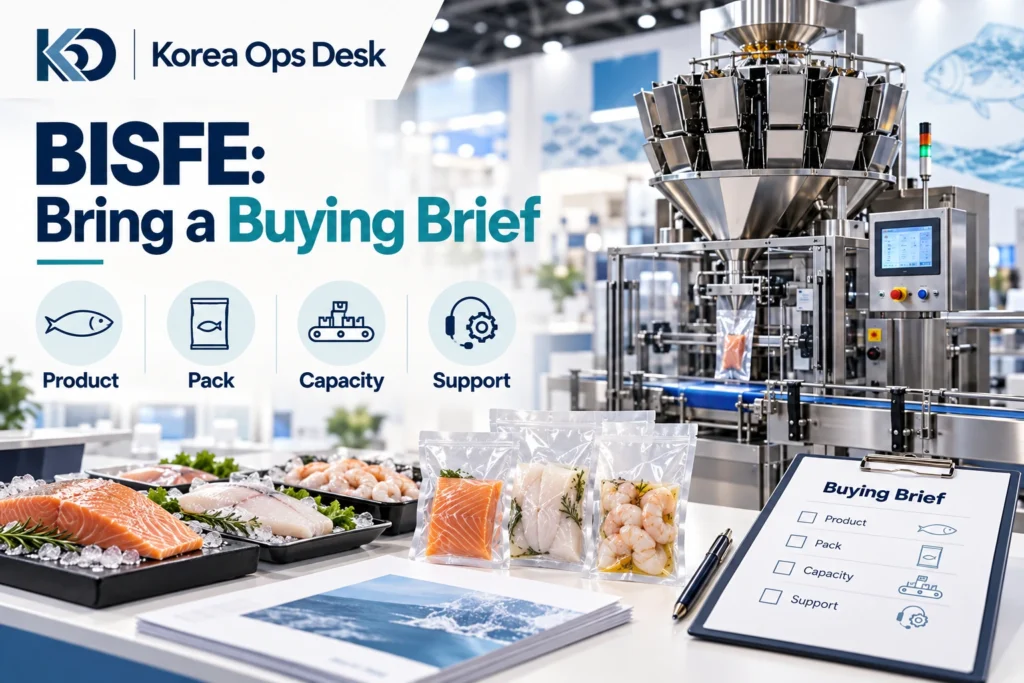
BISFE 2026 takes place at BEXCO in Busan on 4–6 November. For a seafood processor or equipment distributor, the useful outcome is a supplier response tied to your product, package and operating requirements. A catalogue alone rarely answers those questions.
1. A fisheries exhibition with a processing and packaging dimension
The Busan International Seafood & Fisheries EXPO is hosted by Busan Metropolitan City. Its published scope covers seafood products as well as fisheries equipment and processing and packaging. The equipment categories extend from sorting and freezing to packaging materials, detection systems and packaging automation.
For buyers, the practical implication is that a search for “seafood machinery” is too broad to organize a useful visit. A business looking for a weighing and packing step needs a different conversation from one evaluating a freezing system. Identify the specific task before selecting companies, and confirm current participation and the relevant product contact directly with the organizer or supplier.
2. Describe the product and pack before asking for a machine
A short application brief gives suppliers something concrete to respond to. It also lets a remote team compare answers against the same requirement rather than comparing unrelated demonstration claims.
- Product form: describe what the equipment will handle, including the product’s physical form and the condition in which it reaches this step.
- Pack format: identify the intended pouch, tray, carton or other format, with the range of sizes your team needs considered.
- Required output: state your required operating rate and ask which assumptions the supplier uses when discussing capacity.
- Site utilities: supply the known space and utility constraints and request the proposed machine’s installation requirements.
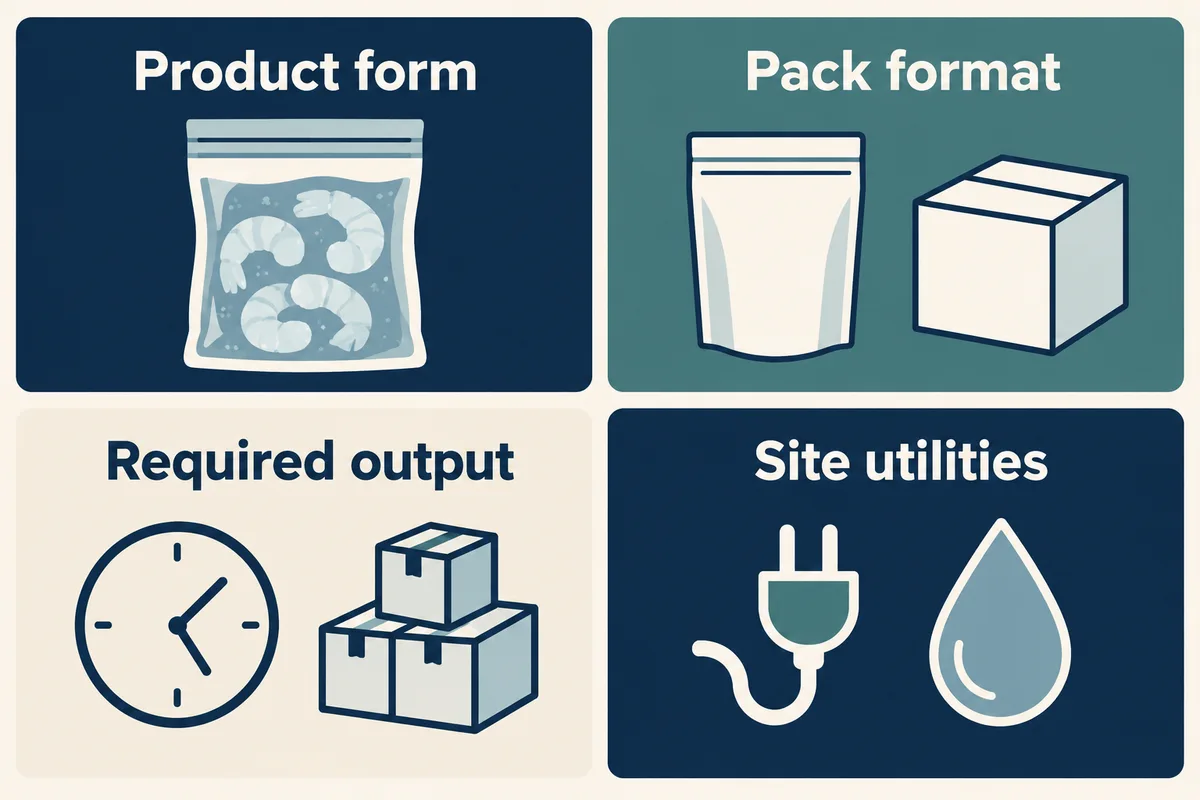
These are questions for an equipment discussion, not a substitute for your process design. Ask the supplier to name the exact model and configuration it proposes for the brief. When a claim depends on a particular product, package or operating condition, keep that condition beside the claim.
3. Turn a booth demonstration into a focused technical follow-up
A demonstration can help a buyer decide what to investigate next. To make it useful, record what was demonstrated, the configuration shown and which part of your application still needs an answer.
Ask for the model-specific specification sheet, installation drawing and available operating or maintenance documentation. Clarify how changeovers, cleaning access, consumables and spare parts are addressed in the proposed configuration. Ask who will answer the technical questions after the exhibition and who handles support in your destination market.
If a demonstration uses a different product or pack from yours, note the difference and ask what further assessment the supplier proposes. A photograph of a running machine and a capacity statement are different pieces of evidence; keep them separate so your team can evaluate each appropriately.
4. Make your seafood application specific enough to discuss
“We need a seafood packing machine” leaves the supplier guessing. Give it a representative description of the product and the result you need. Distinguish the physical product condition from the target pack: whole fish, portions and irregular pieces can lead to different questions even when they use the same packaging material.
| Brief field | What to describe | Question for the supplier |
|---|---|---|
| Product form | Species/product, shape, size range and condition | Which parts of this range need separate assessment? |
| Temperature/state | Condition entering the process | What operating assumptions does your proposal use? |
| Target pack | Pouch/tray/carton, dimensions and fill target | Which formats and tooling are included? |
| Required output | Target rate and acceptable finished result | Under what product and operating conditions? |
| Variability | Changes in size, moisture or product presentation | How would your configuration handle this variation? |
| Cleaning | Routine, access and changeover expectations | Which documents and demonstrations can you provide? |
| Line connection | Upstream feed and downstream handling | Who supplies each interface? |
| Support | Destination, training and spare-parts expectations | Who handles installation and later service? |
Avoid inventing precise requirements just to complete the form. Mark unknowns and ask the supplier what information it needs. Photographs, drawings and a representative product description can make the first conversation much more productive. Share only the project information authorized for the meeting.
Separate the desired capacity from a supplier’s demonstrated capacity. Record whether a figure refers to empty cycles, a particular product, one operator or a complete line. Ask what must be established for your application and which assumptions will appear in the written proposal.
 Korea Ops Desk
Start with the seafood and the process
- 01
Input
Product form and condition
- 02
Operation
What the machine must do
- 03
Output
Pack and acceptable result
- 04
Context
Utilities, cleaning and line interfaces
5. Capture the demonstration conditions and request the next test
At the booth, identify the exact machine model and options before filming or taking detailed photographs with permission. Record the product used, package type, settings the supplier is willing to share and the part of the process actually demonstrated. An attractive finished pack does not explain the feeding, sealing, inspection or reject-handling steps by itself.
| Demonstration note | Useful entry |
|---|---|
| Machine | Model, options and configuration shown |
| Product and pack | Actual demonstration material and dimensions |
| Observed sequence | What you saw from input through output |
| Supplier explanation | Claim and the person who made it |
| Difference from your use | Your product/pack/operating condition that was not shown |
| Further evidence | Document, sample assessment or demonstration requested |
| Responsible contact | Technical contact and next update |
For an inspection system, ask the supplier to define the application assessment it proposes and the evidence your quality team would receive. A catalogue category such as “foreign material inspection” does not establish a detection result for your particular food and package. Keep the question tied to your product rather than asking for a universal assurance.
Subject: BISFE technical follow-up: [product and packaging application]
At BISFE we discussed [model/configuration] for [our application]. Please review the attached product and pack brief.
Please confirm:
1. Proposed configuration and included components
2. Capacity assumptions for our product and pack
3. Utilities, space and installation requirements
4. Cleaning, changeover and consumable information
5. Connection scope to upstream/downstream equipment
6. Further product assessment or demonstration needed
7. Installation, training and spare-parts support for [destination]
Please identify the technical contact and the documents you can send for our review.
Korea Ops DeskRecord what the demonstration actually answers
- 01
Shown
Machine, product and pack
- 02
Explained
Supplier-attributed claims
- 03
Missing
Conditions not demonstrated
- 04
Requested
Next evidence for technical review
If the right engineer is not at the booth, collect a named introduction and send the brief while the context is fresh. KOD can follow up locally for the promised specification or technical response and keep the answer connected to the correct machine.
6. Compare complete scopes and plan the follow-up decision
A quotation for one machine can look cheaper than a proposal that includes feeding, conveyors, tooling, commissioning and training. Build a scope matrix before comparing totals. Use “included,” “optional,” “excluded” and “awaiting answer” rather than treating an empty cell as zero cost.
| Scope line | What to establish |
|---|---|
| Main machine | Exact model and configuration |
| Product-contact and format parts | Items required for the intended product/pack range |
| Feed and discharge | Equipment and interfaces on each side |
| Inspection/reject handling | What is supplied and what remains another party’s task |
| Installation and commissioning | Location, responsibilities and required site preparation |
| Training and documentation | Audience, language and format |
| Consumables and spares | Initial items, future ordering route and lead-time information |
| Packing and delivery | Export packing, named delivery basis and shipment information |
Worked example: two different packaging proposals
A seafood processor receives one offer for a standalone packaging machine and another for a machine with feed conveyor, format parts and commissioning. The purchasing team first asks both companies to mark the same scope matrix. It then separates the equipment price from the extra work needed to make each proposal usable. The cheaper base machine may still be suitable, but the decision now includes the missing tasks.
- Send the same product/pack brief to the shortlisted suppliers.
- Ask each to mark the supplied scope and unresolved assumptions.
- Request the technical documents needed by your operations team.
- Choose the next assessment or demonstration for the strongest candidates.
- Obtain revised commercial offers only after important scope gaps are understood.
Korea Ops DeskTurn BISFE contacts into comparable proposals
- 01
Common brief
One application for every supplier
- 02
Scope matrix
Included, optional and missing items
- 03
Technical review
Evidence and application questions
- 04
Commercial decision
Comparable offer and next step
KOD can collect information from selected BISFE booths and pursue the Korean-language follow-up afterward. Give us the process brief and the questions holding up your review so the assignment produces a useful file for purchasing and engineering.
7. Define the handoff between machines
A buyer replacing one machine has a different requirement from a buyer considering a complete line. State what arrives at the proposed equipment and what must leave it. Ask the supplier to mark which parts of that handoff are included in its proposal.
- Weighing and filling: is the discussion about portioning product, putting it into a package, or both? Ask how the offered unit connects with the equipment before and after it.
- Vacuum packaging: identify the package and product your team wants assessed. Request the supplier’s proposed configuration and the materials it expects to use.
- Inspection: specify the question your quality team needs answered and request the supplier’s assessment for that application. A listed inspection category is not a confirmed detection capability for your product.
- End-of-line packing: distinguish primary packaging from carton handling, labelling and palletizing so these are not silently treated as one quoted scope.
Use the same boundaries in every supplier brief. If one proposal covers only a machine and another includes integration work, retain that difference for the subsequent quotation review.
8. Build a shortlist your technical team can actually review
An effective visit record does not turn every conversation into a confirmed specification. Use three clear categories: what the supplier said, what document was actually received and what still needs confirmation.
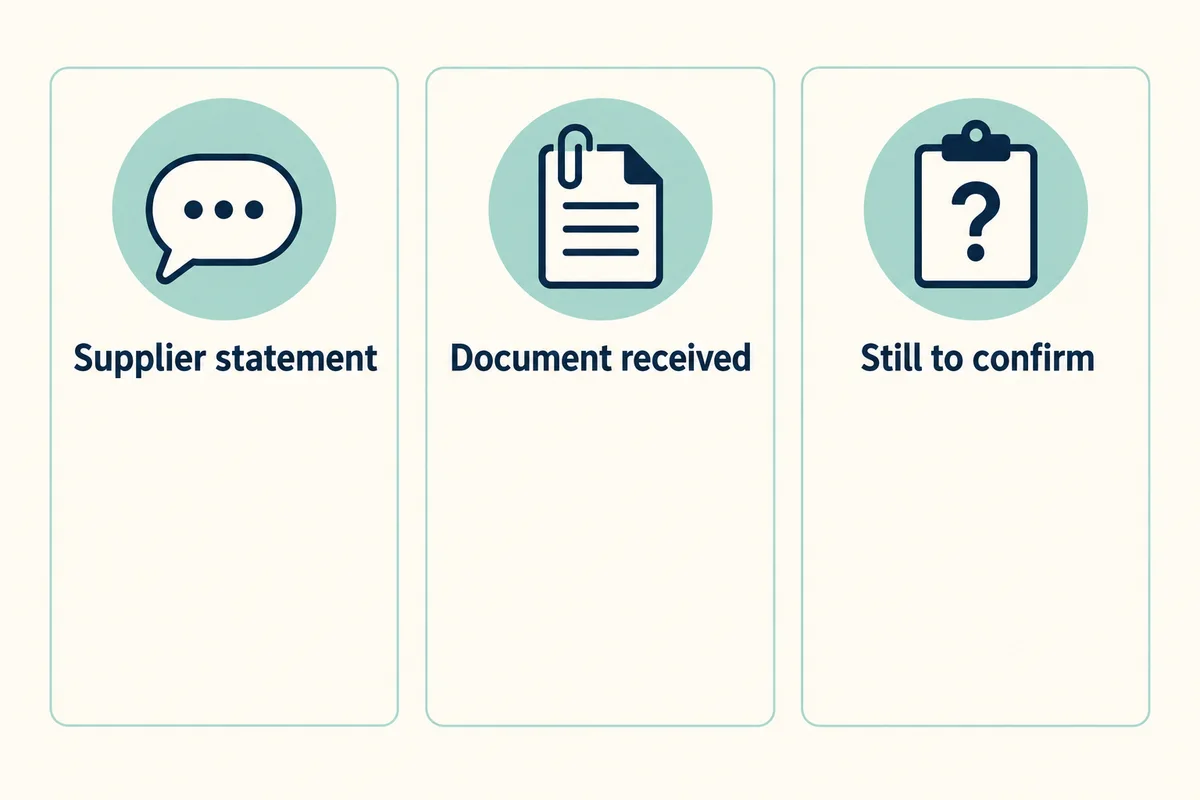
Keep the proposed model, application conditions, documents received and unresolved points together. Your team can then decide whether to request an application-specific demonstration, a revised specification or a commercial offer. For the next step, see KOD’s guide to comparing Korean supplier quotations.
A local booth visit is useful when the missing work is information collection: identify the right contact, ask the prepared application questions and obtain available documents. Send your own specialist when the next decision requires a hands-on technical evaluation. Agree that distinction before arranging coverage.
9. Practical information for BISFE 2026
- Dates: November 4–6, 2026.
- Venue: BEXCO Exhibition Center I, Halls 1–3, Busan.
- Opening hours: November 4–5, 10:00–17:00; November 6, 10:00–15:00, as listed in the English visitor guide.
- Admission: the English guide lists KRW 5,000 for onsite admission and free entry with an invitation. The online registration page lists 31 October 2026 as the free preregistration cutoff, which has passed as of this update. Use the current onsite or invitation arrangements and confirm any changes with the organizer.
- Planning: use the organizer’s current visitor information and confirm the companies and product contacts relevant to your assignment.
10. Official sources
Need seafood equipment answers from BISFE in Busan?
Korea Ops Desk can approach selected exhibitors, ask your application questions, collect available documents and permitted photographs, and organize the follow-up in English.
Send us: Product and pack description, equipment requirement, priority exhibitors, destination and technical questions to resolve.
24/7 inquiries · colin@koreaopsdesk.com
Related practical guides
Expanded on 2 November 2026. Worked transactions and message templates are illustrative examples.